


Last Updated: November 24, 2026
Quick Summary
Choose nautical socks for sailing by matching the sock to the day: waterproof or water-resistant pairs for standing water and heavy spray, wool or wool blends for cold offshore conditions, and thin synthetics for warm-weather cruising. Always check toe room, heel lock and circulation inside your sea boots, since a sock that crowds the toe box will rub and turn cold feet colder.
- Waterproof socks earn their keep in standing water or hours of heavy spray, not a dry cockpit.
- Cold water pulls heat from feet fast, so lean toward wool or wool blends over cotton.
- Test fit with three checks: toe room, heel lock and no tight band at the calf.
- Size your boot for the layered setup if you plan a liner plus insulating sock.
- Machine wash cold on gentle, tumble dry low, skip bleach and dry socks fully before bagging.
Table of Contents
- How do you choose nautical socks for sailing?
- Waterproof socks for sailing: when a membrane earns its keep
- The best socks for sailing match the day, not the brochure
- Wool socks for sailing: warmth that survives a splash
- Socks for sailing shoes: thickness, fit and boot space
- How to dry, wash and keep sailing socks from smelling like low tide
- Technical sailing socks vs. novelty nautical socks: picking your lane
- Build your sailing sock drawer from the nautical socks collection
- Frequently Asked Questions
How do you choose nautical socks for sailing?
Choosing nautical socks for sailing comes down to one question: are your feet going to get wet on purpose or only by accident? Answer that and the rest, material, thickness, waterproofing, fit inside a sea boot, sorts itself out fast.
Sailors climbing aboard in cotton gym socks tend to regret it by the second tack. On Block Island, the fog rolls in, the deck stays damp, and the wind off the Great Salt Pond does not care about your footwear plans.
Below, we walk through the seven things that actually matter, from waterproof membranes to whether your sock fits inside a sailing boot. The quick version first:
| What you're doing | Sock type | Why it works |
|---|---|---|
| Dinghy sailing, spray, wet decks | Waterproof or water-resistant | Keeps feet dry when water comes over the rail |
| Cold offshore racing | Wool or wool-blend | Warmth that holds up when damp |
| Warm-weather cruising | Thin synthetic | Wicking and breathable under deck shoes |
| Dry land, apres-sail | Novelty nautical crew socks | Comfort, personality, no boot squeeze |
A quick note on the fun side: nautical socks are not only technical gear. They are also the easiest way to bring a little harbor humor to the dock, and that is exactly what we make.
Waterproof socks for sailing: when a membrane earns its keep
Waterproof socks for sailing are worth it when your feet will be in standing water or heavy spray for hours, not when you are crossing a dry cockpit on a sunny afternoon. A waterproof membrane blocks water from getting in while letting some vapor escape.
The trade-off is real.
The best socks for sailing match the day, not the brochure
Work down this decision path before you pack:
- Will your feet be standing in water or taking repeated spray? If yes, go waterproof or water-resistant and plan extra boot room. If it is only the odd splash, a quick-drying synthetic is enough.
- What is the water temperature? Cold water pulls heat out of feet fast even on a sunny day. Below the point where you would swim comfortably, lean toward wool or a wool blend rather than thin cotton or plain synthetic.
- How long is the trip? A two-hour daysail forgives a lot. A multi-day passage does not, because a damp sock has no chance to dry and every hour compounds the chill.
- What footwear are you wearing? Deck shoes, sea boots, and dinghy boots each leave different room for sock thickness. Match the sock to the shoe, never the reverse.
Here is the same logic in table form:
| Conditions | Sock type | What to watch |
|---|---|---|
| Dinghy sailing, spray, wet decks | Waterproof or water-resistant | Needs extra boot room; inspect seams |
| Cold offshore racing | Wool or wool blend, medium thickness | Check toe room before you commit |
| Warm-weather cruising | Thin synthetic | Breathability over insulation |
| Long wet passages | Liner plus insulating sock | Plan for the bulk up front |
| Dock days and apres-sail | Novelty nautical crew socks | Comfort and personality, no boot squeeze |
A common pattern is that sailors over-buy for the worst day and then wear the heavy pair on a mild one. If you sail a mix of conditions, two or three pairs in different weights will serve you better than one heroic pair.
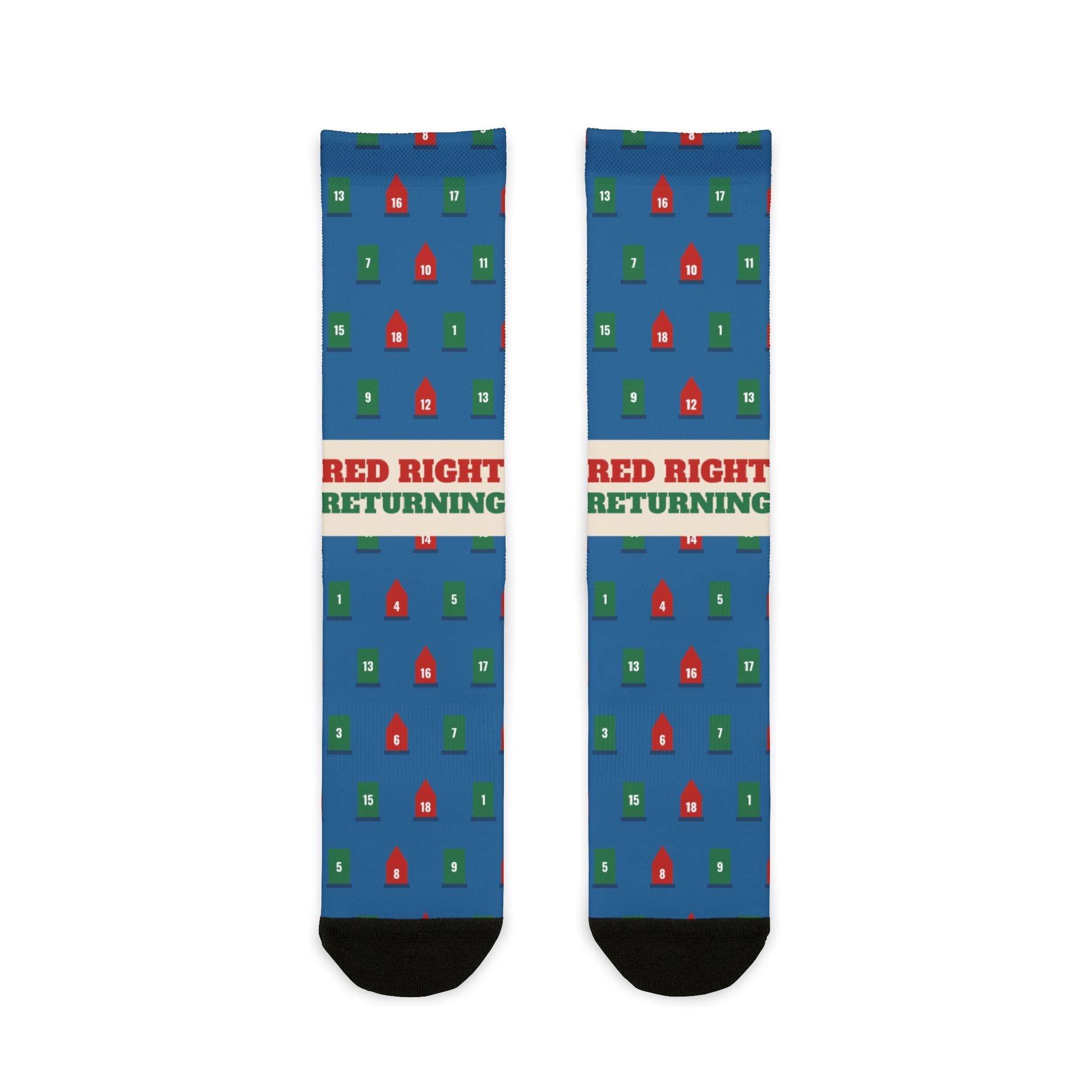
For the fun end of the drawer, the Red Right Returning Buoy Socks print the rule every boater learns, red nuns and green cans, right where you will see them. They are $12.99, fit US women's 5 to men's 13, and are machine wash cold, which makes them an easy add to a nautical gifts order.
Wool socks for sailing: warmth that survives a splash
The catch is durability and cost.
A common mistake is wearing thick wool socks inside tight sailing boots. Warmth does nothing for you if your toes are jammed. Check the fit before you commit.
Socks for sailing shoes: thickness, fit and boot space
Socks for sailing shoes need to leave room in the toe box, because a sock that is too thick turns a comfortable deck shoe into a cramped one. Thickness, layering, and boot space are the three specs most sailors ignore until their feet complain.
Start with the shoe, not the sock. Put on the sock you plan to sail in, then slide your foot into the boot or deck shoe and check three things:
- Toe room: you should be able to wiggle your toes without the sock pressing them flat. If the sock fills the toe box, the boot is too small for that sock.
- Heel lock: the heel should sit down in the heel pocket without sliding. A sock that bunches here will rub, and wet feet rub faster.
- Circulation: if the sock leaves a deep band mark at the calf or the top of the foot, it is too tight. Restricted circulation makes feet cold no matter how warm the fabric is.
Layering is where most people get it wrong. A thin liner sock under a thicker insulating sock adds warmth, but it also adds bulk, so you need a boot with real toe room to run that setup. If you are layering for cold offshore sailing, size the boot for the layered setup, not for a single thin sock.
Sock thickness should match the shoe, not the other way around. Thin socks suit snug deck footwear; medium socks suit roomier sea boots; thick wool socks need a boot with genuine toe room. Chafing usually comes from a poor fit, not bad luck, and a sock that slides down inside a boot will rub a blister before the first watch is over.
Watch out: a sock that feels fine on dry land can tighten up once it is wet, so test the fit with the sock slightly damp if you are heading offshore.
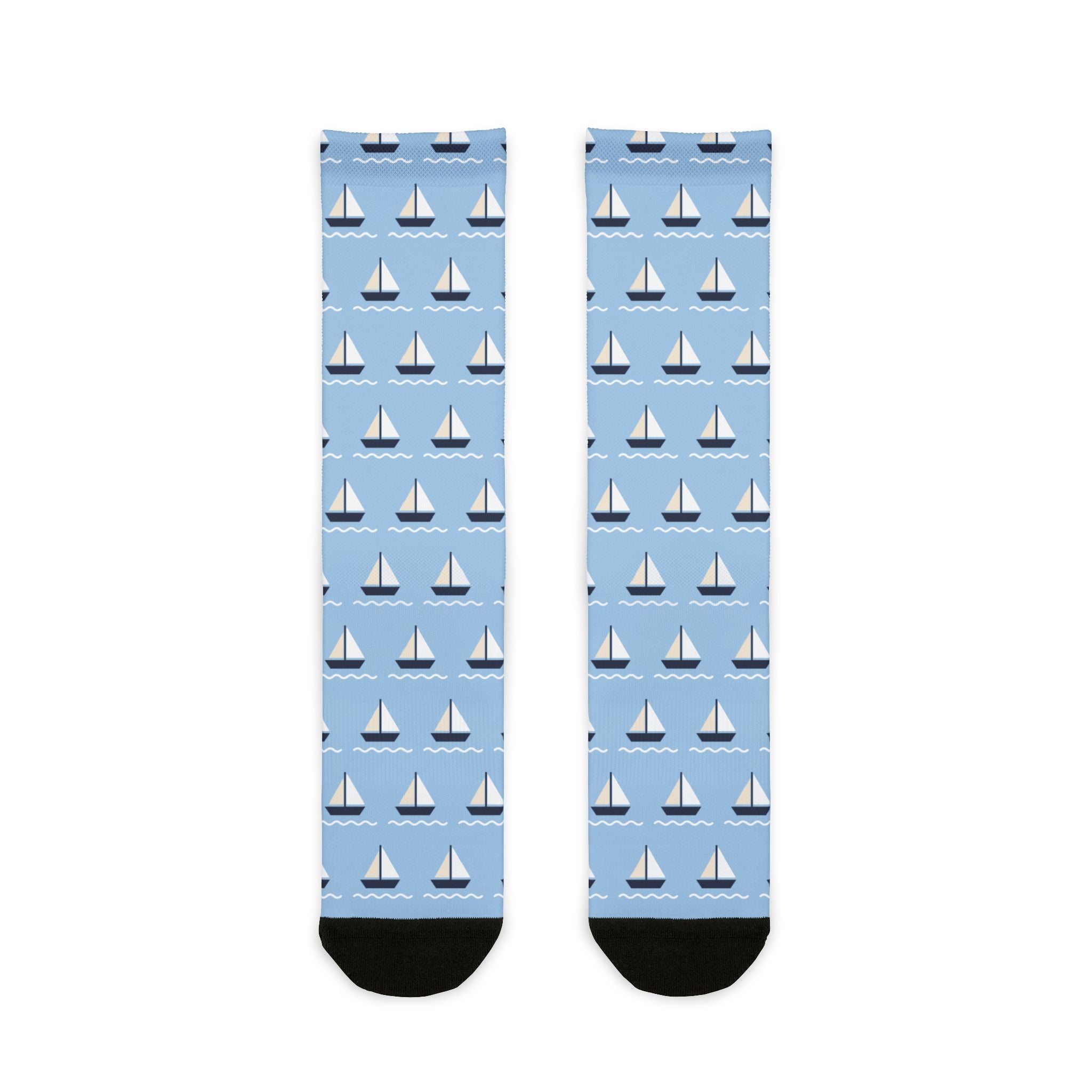
For the apres-sail end of the day, the Sailboat Regatta Socks put a whole fleet of little sailboats on a light-blue sea for $12.99, in that same women's 5 to men's 13 fit. They are a comfortable crew sock for the dock, not a boot liner, and that is exactly the point.
How to dry, wash and keep sailing socks from smelling like low tide
Machine wash cold on a gentle cycle, tumble dry low, and do not bleach.
Care checklist:
- Machine wash cold on a gentle cycle
- Tumble dry low, or air dry on the rail
- Skip the bleach entirely
- Turn printed socks inside out before washing
- Dry fully before stuffing them back in a gear bag
Wet feet left in a damp bag are where the low-tide smell starts. Dry your socks completely, and rotate between pairs on multi-day trips so one set can dry while you wear the other. If you want a deeper wash routine for printed coastal gear, our guide on how to wash hoodies without ruining them covers the same cold-wash, low-heat logic.
Technical sailing socks vs. novelty nautical socks: picking your lane
Technical sailing socks and novelty nautical socks solve two different problems, and the smart move is owning a little of both. Novelty socks bring personality, humor, and a great gift.
If you are building the technical side, look for wicking, breathable fabrics and a fit that matches your boots. If you are leaning toward the fun side, our roundup of funny ocean and island novelty socks is a good place to find a pair that gets a laugh and actually gets worn. For a single concrete example, the Sailboat Regatta Socks put a whole fleet of little sailboats on a light-blue sea for $12.99, in that same women's 5 to men's 13 fit.
Build your sailing sock drawer from the nautical socks collection
Ready to fill the drawer? Start with the nautical socks collection, where you can browse anchors, sailboats, buoys, signal flags, rope knots, lighthouses and ferries in one place. Every pair is $12.99, or any 2 pairs for $20 through the Sock Dock deal.
A few picks worth a look:
- Hold Fast Anchor Stripe Socks, navy stripes and red anchors with the old sailor motto "hold fast," $12.99.
- Sunset Sail Socks, a sailboat silhouette against a striped sunset, $12.99.
- Red Right Returning Buoy Socks, red nuns and green cans with the rule every boater learns, $12.99.
Buying for a boat-loving friend or a stocking stuffer? The nautical socks collection and our gifts under $30 make it easy. Shipping is $5.95 on US orders under $35 and free on orders of $35 or more after discounts, and everything is made to order with most orders arriving within 5-15 business days, so order early for the holidays.
Prefer Etsy? Many BlockBoundRI designs are also in our Etsy shop: https://www.etsy.com/shop/BlockBoundRI
At BlockBoundRI, we make coastal socks and gifts with designs built for boat lovers, Block Island regulars, and anyone who wants a little harbor humor in their drawer. Our nautical socks are $12.99 a pair, any 2 pairs run $20, and orders of $35 or more ship free within the US. Get started with BlockBoundRI and put a little salt and personality in your sock drawer.
Frequently Asked Questions
What socks are best for sailing?
The best socks for sailing depend on conditions. Fit matters as much as fabric: a sock that bunches inside a sailing boot causes chafing, so match thickness to boot space and always pack a dry backup pair.
Are waterproof socks good for sailing?
Waterproof socks for sailing work well when spray, rain or wet decks are likely. A waterproof membrane blocks water from reaching your skin while still letting some vapor escape, which helps on long wet watches. They are less ideal for hot, dry days because they trap more heat than a plain breathable sock. Many sailors keep one waterproof pair for rough weather and lighter socks for fair conditions, swapping at the first sign of soaked feet.
Should sailing socks be thick or thin?
Thickness should follow your footwear and the weather, not preference alone. The real test is boot fit: if a thick sock makes your toes press against the front of the boot, size down in sock thickness. Bring the socks you plan to wear when you try on deck footwear.
How do you keep your feet warm while sailing?
Dry feet stay warm feet. Loosen laces slightly on long watches to keep circulation going, and change socks the moment your feet feel clammy rather than waiting for a break.

Leave a comment